
The US is expected to push for sweeping changes in India's policies, ranging from tariff reductions to regulatory overhauls, that could benefit American firms and exporters, under the proposed bilateral trade agreement with India, think tank GTRI said on Sunday.

Political leaders cutting across party lines have joined hands with the civil society to launch a nationwide campaign against GM crops and the Biotechnology Regulatory Authority of India Bill.
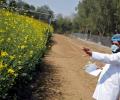
The Genetic Engineering Appraisal Committee (GEAC) has recommended the environmental release of the genetically modified (GM) mustard variety DMH (Dhara Mustard Hybrid)-11, paving the way for the commercialisation of the country's first GM food crop. The GEAC said the recommendation was valid for four years from the date the approval letter was issued. Further studies and coordinated trials will have to be conducted jointly with the Indian Council of Agriculture Research (ICAR) within two years, according to the minutes of the GEAC meeting held on October 18, which was released on Wednesday.
There has been strong opposition from organisations influential with the government against approval to GM foods.

The study also found that most GM foods did not disclose the fact on the label. "A few also made false claims of being GM-free," the study by CSE said.

Modi government is pushing GM food crops without adequate safety assessment and transparency, claim activists.

Efforts by Indian activists to challenge the Biotechnology Regulatory Authority Bill, now pending in Parliament, may get a boost from a controversy that has broken out in the US

Not only is illegal herbicide-tolerant cotton spreading across the country, biosafety regulations are being openly flouted by private crop developers acting in collusion with public research institutions.
